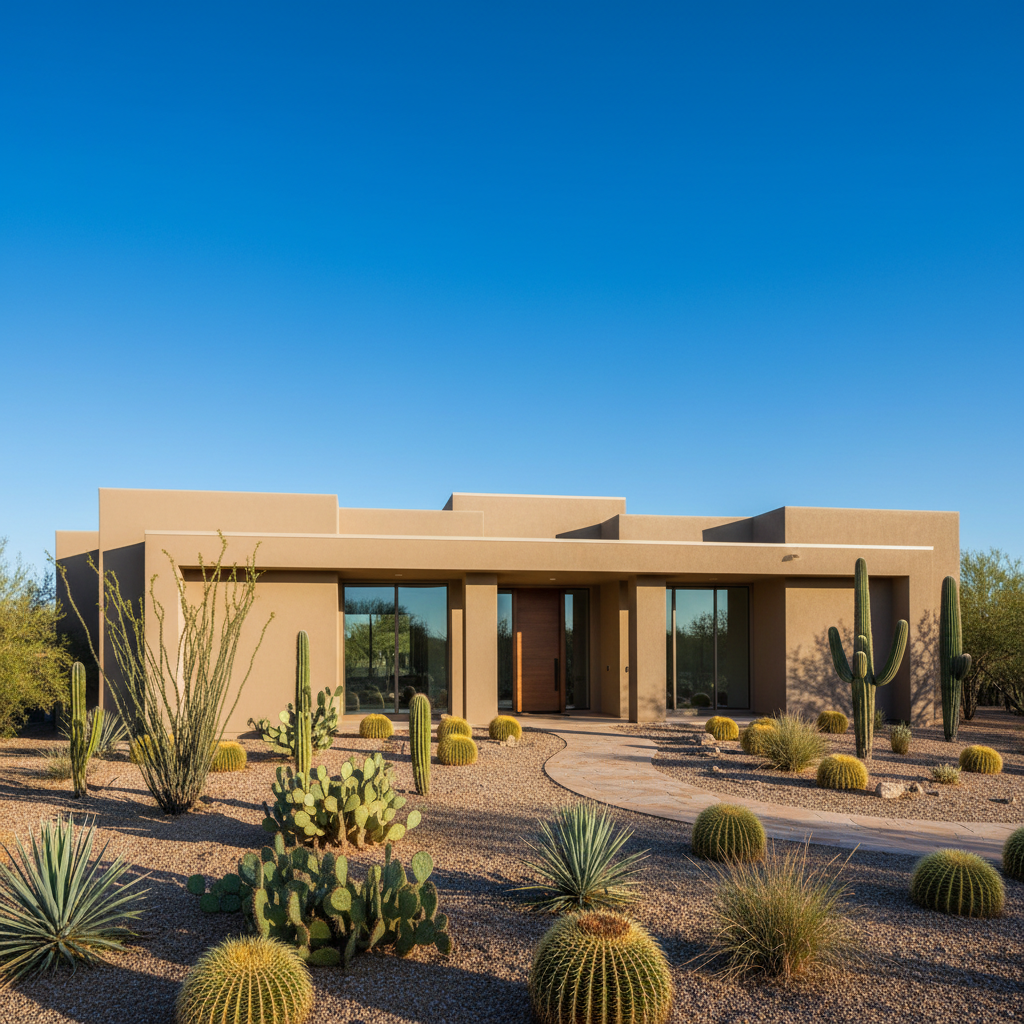
The Desert Accelerates Surface Degradation
In a temperate climate, a 10-year-old exterior paint job might still be in reasonable condition. In Scottsdale, the same paint job at 10 years is likely chalking, cracking, and showing significant UV fading. The combination of intense UV radiation, extreme heat, and monsoon moisture cycles degrades paint faster than almost any other climate in the country.
This means that when it's time to repaint, the surface condition is almost always worse than it looks. Thorough prep isn't optional in the desert — it's what separates a paint job that lasts 8 years from one that fails in 3.
The Three Desert-Specific Prep Challenges
1. Chalking
Chalking is the powdery residue that forms on paint surfaces as UV radiation breaks down the paint binder. Run your hand across an older Scottsdale exterior and you'll often see white powder on your palm — that's chalk. Painting over chalk without proper treatment is one of the most common DIY mistakes.
Fix: Pressure wash thoroughly, then apply a penetrating masonry primer. The primer bonds to the substrate beneath the chalk layer, providing a solid base for the finish coat.
2. Efflorescence
Efflorescence appears as white, crystalline deposits on stucco and masonry. It's caused by water moving through the substrate and depositing mineral salts on the surface as it evaporates. It's common in Scottsdale after monsoon season and indicates moisture movement through the wall.
Fix: Scrub with a stiff brush and diluted muriatic acid (1 part acid to 10 parts water). Rinse thoroughly and allow to dry completely. If efflorescence recurs, investigate the moisture source — painting over active moisture migration will always fail.
3. UV Degradation and Peeling
Arizona's UV intensity causes paint to become brittle over time. Brittle paint cracks, and cracked paint allows moisture in — which then causes peeling. On south- and west-facing walls, this process can happen in as little as 5–7 years with standard paint.
Fix: Remove all loose and peeling paint with scrapers and wire brushes. Feather the edges of remaining paint with sandpaper. Apply primer to all bare areas before finish coats.
Our Complete Prep Checklist
Inspection
Check for moisture with a pin meter (readings >17% = stop and fix)
Identify all cracks — hairline, structural, and expansion joint failures
Look for efflorescence (white chalky deposits)
Test for chalking by rubbing hand on surface — chalk = needs primer
Check caulking around windows, doors, and penetrations
Cleaning
Pressure wash at 1,500–2,000 PSI
Treat mildew with bleach solution before washing
Remove all loose and peeling paint
Allow 48–72 hours drying time after washing
Repairs
Fill hairline cracks with elastomeric caulk
Repair larger cracks with patching compound
Replace failed caulking around all penetrations
Address any structural stucco damage before painting
Priming
Apply masonry primer over all bare or repaired areas
Use full-coat primer on heavily chalked surfaces
Allow primer to dry fully before applying finish coats
How Long Does Prep Take?
On a typical Scottsdale single-family home, proper prep takes 1–2 full days before a brush or roller touches the finish coat. This includes washing, drying time, repairs, and priming. Contractors who quote very fast timelines are often skipping prep steps.
When you get multiple estimates, ask specifically what prep steps are included. A lower price that skips prep will cost more in the long run when the paint fails early.
Prep and Paint Selection Work Together
Even the best paint will fail on a poorly prepared surface. Conversely, thorough prep makes even a mid-grade paint perform significantly better. The two decisions — prep approach and paint selection — should be made together. Our guide on best exterior paints for Arizona heat covers the paint selection side of the equation.